Our Approach to Teaching German
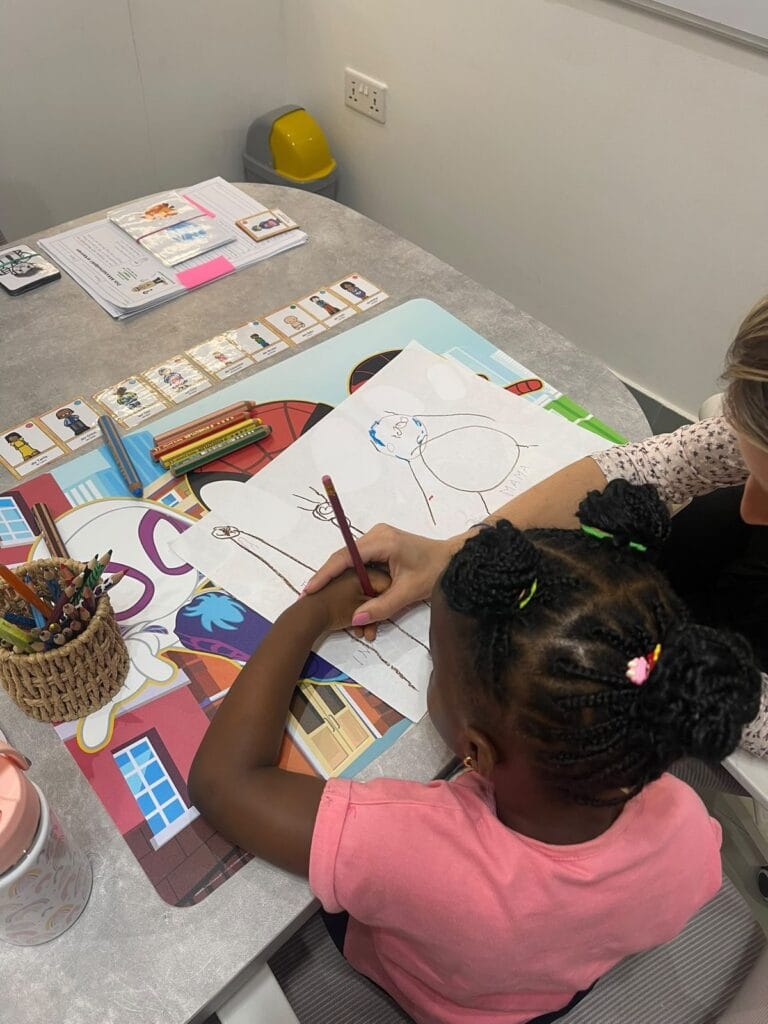
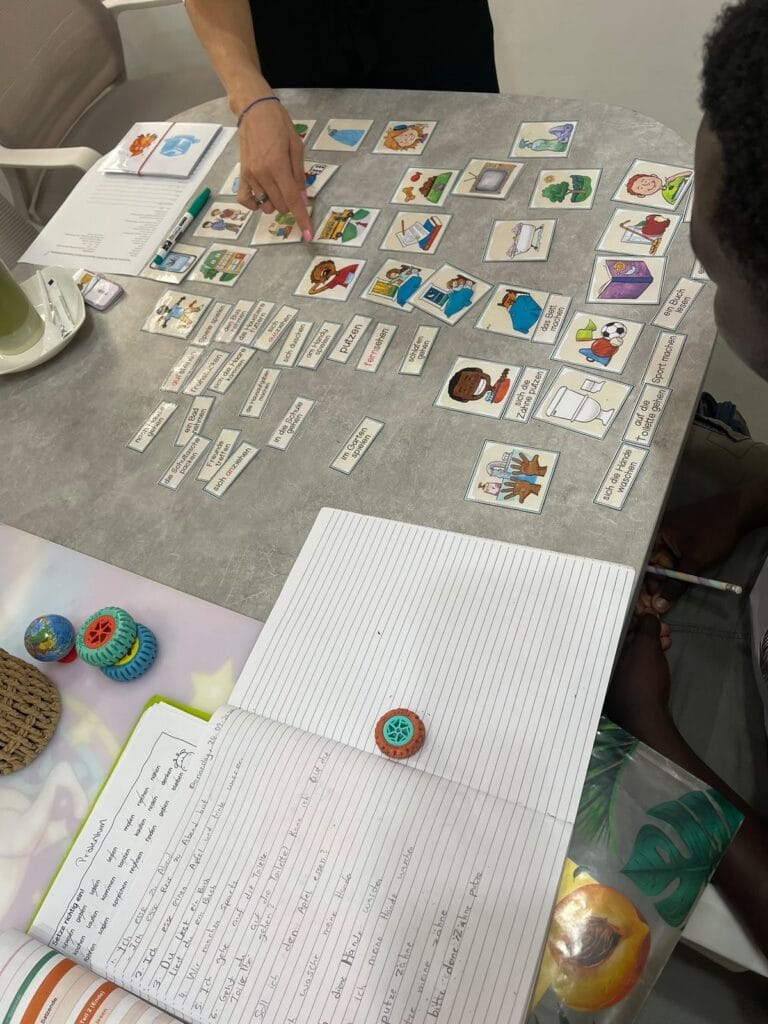
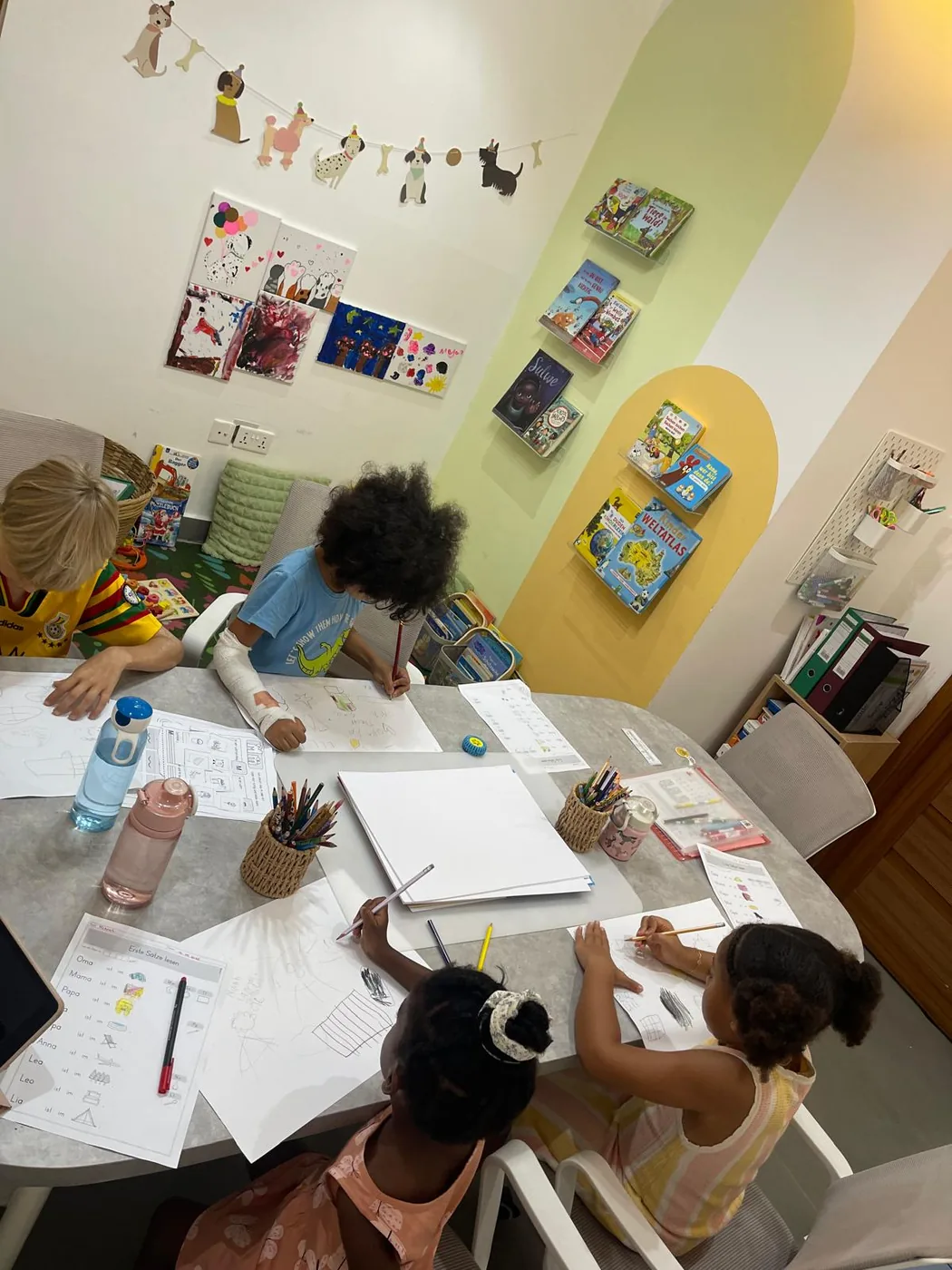
Small group German lessons in Accra with four learners at most: new words come with picture cards and real objects, games replace vocabulary lists, and every lesson has time for real conversation.
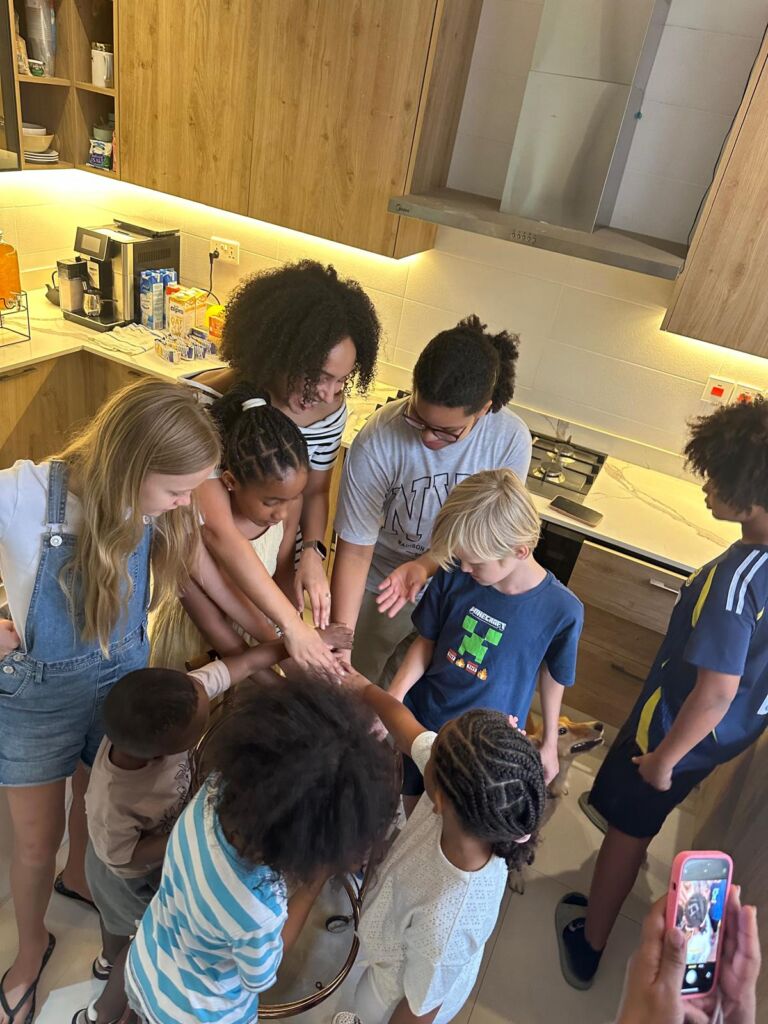
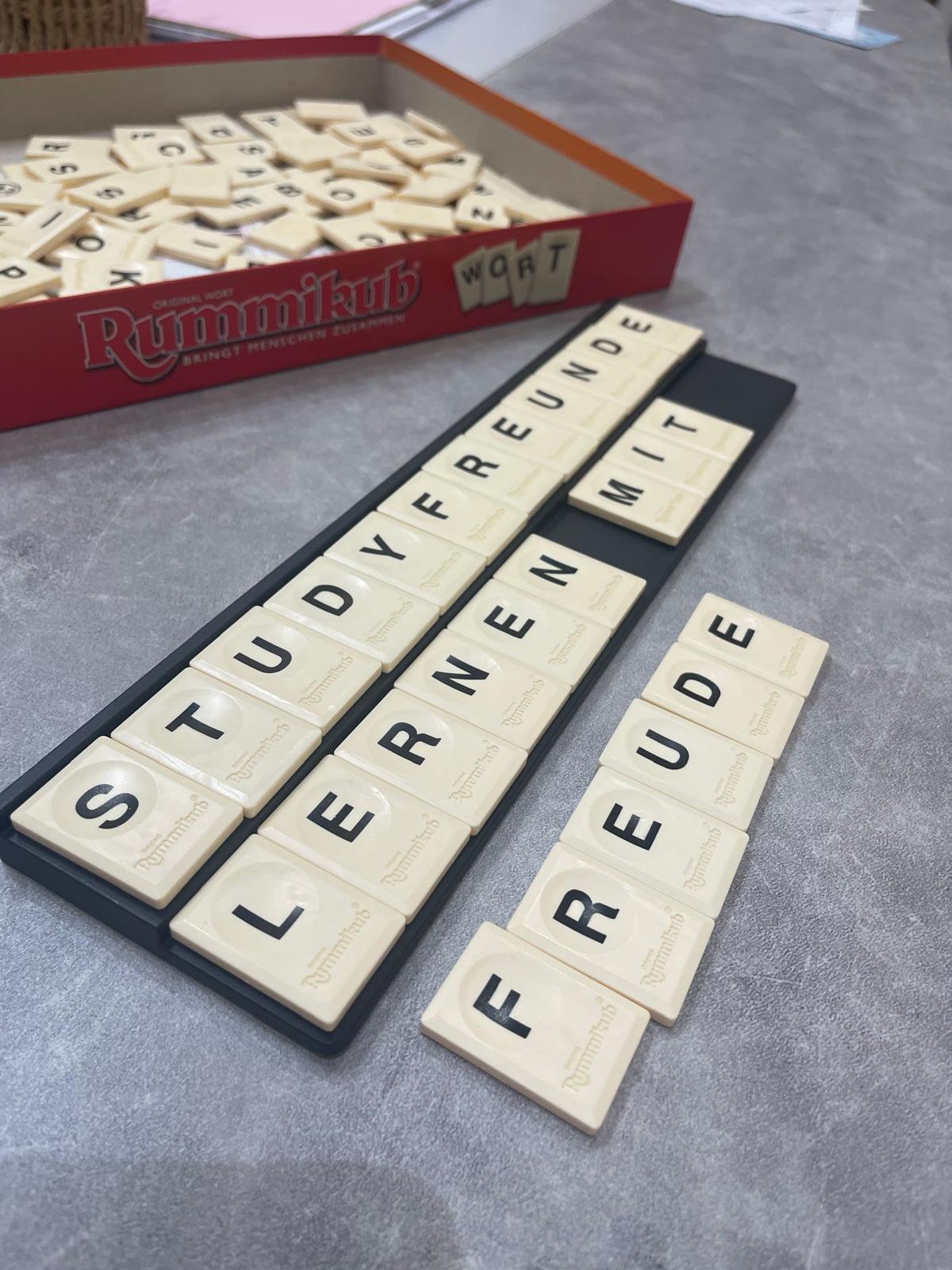
Most people assume lessons for children have to be either playful or serious. It is a false choice. Lernen mit Freude, learning with joy, is the name we teach under, and it does not mean learning without structure or challenge. It means an environment in which learners speak up, ask, get things wrong and grow more confident for it. That applies to a three-year-old singing a song and to a teenager getting ready to study in Germany, Austria or Switzerland, at Studyfreunde in Airport West, Accra.
Clear goals and structure
Every German lesson has a clear purpose and builds on the last, so learners know what they are working towards and why.
Personal attention
Every learner is seen, heard and supported. In-person groups are limited to four, so nobody sits at the back.
Responsive to individual needs
We take account of each learner's age, level, pace and goals, and adjust the teaching so the challenge fits.
Active and meaningful language use
Learners use German rather than only study it. Speaking, listening, reading and writing are tied to real situations.
Guided independence
We explain, model and practise together, then step back as confidence grows and learners work more on their own.
Variety and engagement
Lessons mix conversation, stories, games, practical tasks and movement, chosen to suit the age and the goal.
Repetition that builds retention
Important German vocabulary and structures come back regularly, so learners remember them and use them with confidence.
Feedback and visible progress
Learners know what they are doing well and what comes next. Clear feedback and regular review make progress easy to see.
With our youngest learners
In the 3 to 5 year old group, learning through play means something specific. No screens. Natural materials and real objects rather than worksheets, because children of this age learn with their hands before they learn with a pencil. Every session opens with the same song and closes with the same ritual, and follows a steady rhythm children can predict. That predictability is what lets them settle quickly and join in, and it is why a child who has never heard German before can sit in the same circle as one who hears it at home. Nobody is put on the spot, and nobody has to perform. The German comes through songs, movement and repetition, so that by the time a child starts school, the sounds and the first words are already familiar.


I have enjoyed all my classes and so has my daughter! Our German is improving and I’m beginning to feel more confident. I am so grateful to have found Vanessa!
She’s a great teacher! She knows what she’s doing. She knows how to teach and I love the colourful study papers she uses to enhance learning in a fun way! I recommend Vanessa 1000%. Thank you Studyfreunde!
Melody Prince-Boateng

Beyond the classroom
Two hours a week is where German starts. What decides how far it goes is what happens between the lessons, and in Accra that is the hard part. No German television at home, no grandmother down the road, no playground where anyone answers in German.
That is the gap we built the rest of Studyfreunde to fill. Children come to the Saturday playgroup and reading sessions and use German with each other, not with a teacher. Families borrow from our German library, two books at a time, so there is something German on the shelf at home. Parents meet at the Familien-Café over coffee and German board games, which matters more than it sounds: a child who sees a parent trying stops thinking of German as homework.
This is how it looks in practice across the age groups: German for Preschoolers, from age three, children and teens, and parents, all in groups of never more than four. An overview of every course is on the German classes page, and the easiest way to see whether it fits is a free trial lesson.